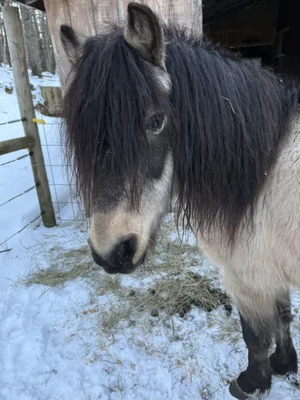
Do gray ponies have a genetic disease?
Do Gray Ponies Have a Genetic Disease?
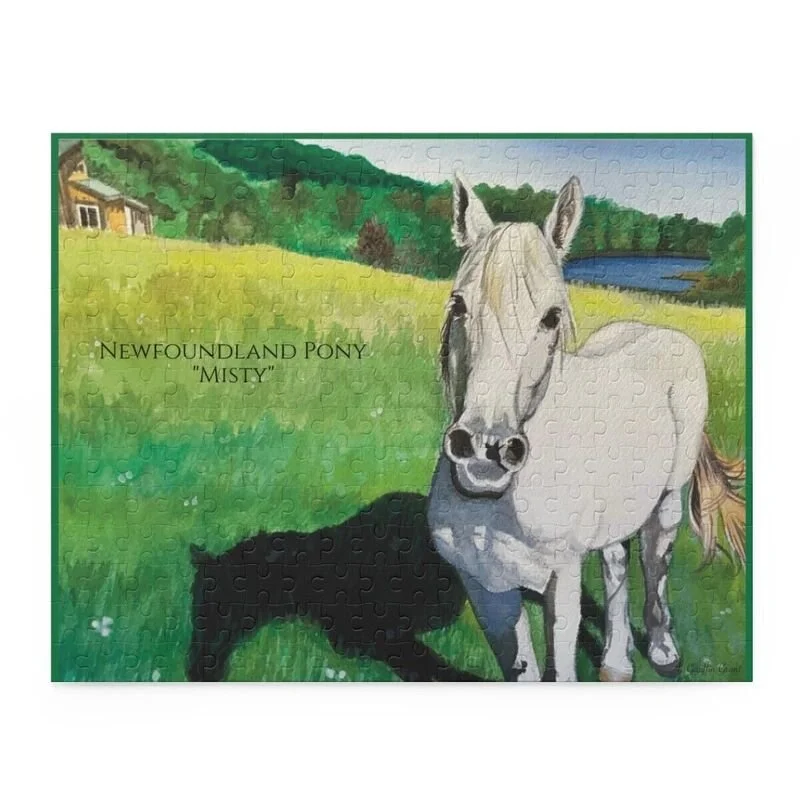
(Pictured, Misty Star of Gambo. Misty has melanoma all under her tail, and around her rectal/vaginal area. This rendered her infertile some years ago. )
First of all, what is a gray pony or horse? From Horsesandus.com:
"A Gray horse is born colored and goes through progressive hair depigmentation as it ages. This is similar to graying human hair, but in horses, it starts soon after birth and continues through different gray shades until the horse is completely white."
Gray ponies/horses are known to be at risk of developing a form of skin cancer known as melanoma which can be malignant or can occur in an area that threatens life.
The link between melanoma and the gray color gene occurs across all breeds of horses and ponies. Gray is a dominant characteristic - only one gray gene is needed for the color gray. The gray offspring of a gray pony inherit that increased risk of melanoma.
If you breed a gray pony to gray pony you increase the chances of getting gray offspring, but you also risk producing a homozygous pony, with two copies of the gray gene (one from each parent.) Doing that doubles the risk of melanoma.
Homozygous means having two copies of a gene.
Heterozygous means having one copy of a gene.
In endangered breeds with lower population numbers, the gray can dominate other colors. Heterozygous grays pass the gray gene on to 50% of their offspring. Homozygous grays can only produce gray offspring.
You can see how grays can easily take over in a small population. For example, look at the critically endangered Eriskay Pony where almost all ponies are now gray. The birth of a non-gray Eriskay pony is now a matter of celebration. The same is true of the Lippizans but the stud managers over centuries have always maintained and preserved non-gray breeding stock.
Throughout history, breeders have noticed that some gray ponies turn white faster than others. Science has now confirmed this, identifying them as "slow gray" and "fast gray". Newer studies also indicate that the fast gray carries a higher risk of melanoma than the slow gray.
We know the Newfoundland Pony population has several gray ponies who have melanoma, including some in which melanoma has occurred in multiple generations. This is where breeding responsibly comes in. The most important step is increasing awareness of this potential threat to the breed, through education.
Think about this - do we really want to increase the number of Newfoundland ponies who will suffer from melanoma ?
How do we avoid this? Most importantly, don't breed gray to gray. That is the simplest way.
There is also testing available that identifies whether you are dealing with the slow or the fast gray. Slow is preferable.
UC DAVIS Veterinary Genetics Lab offers reasonably priced testing for that.
For more detailed information here are some useful links:
https://vgl.ucdavis.edu/test/gray_copy_number
https://www.smartpakequine.com/learn-health/melanoma-horsesrsltid=AfmBOoo9yuvKTg5kNAYqnfG-35O1jXgl5ap29TZdRNN6T1Cosk1GXcFn
Photo credit: Smart Pak Equine
https://www.smartpakequine.com/learn-health/melanoma-horse?srsltid=AfmBOoo9yuvKTg5kNAYqnfG-35O1jXgl5ap29TZdRNN6T1Cosk1GXcFn