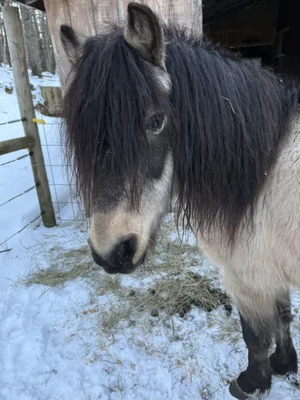
The Typical un-typical Newfoundland Pony
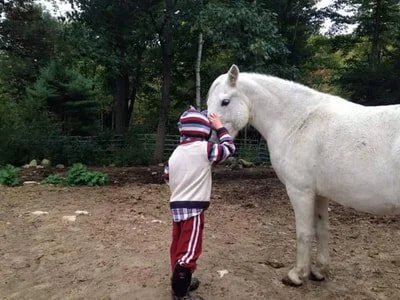
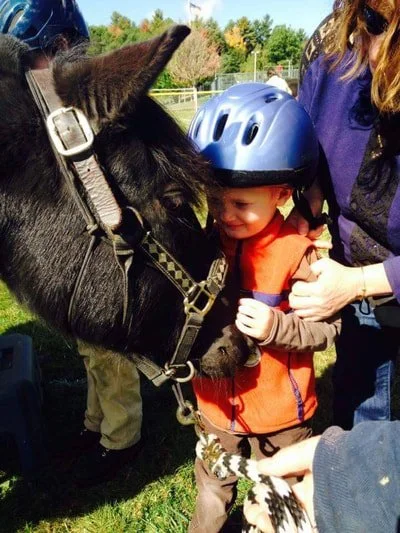
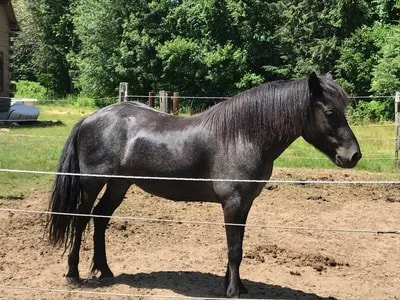
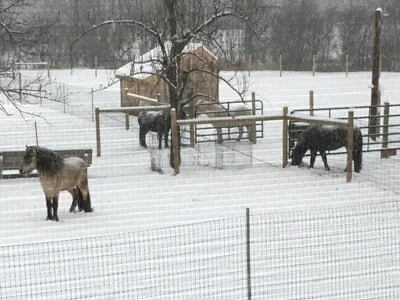
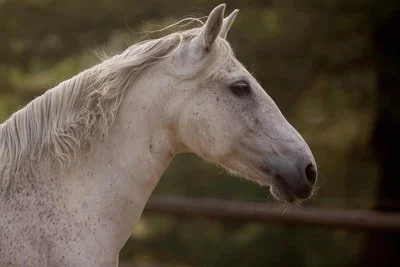
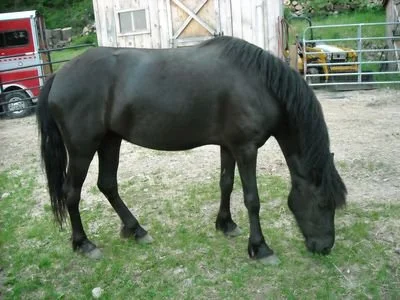
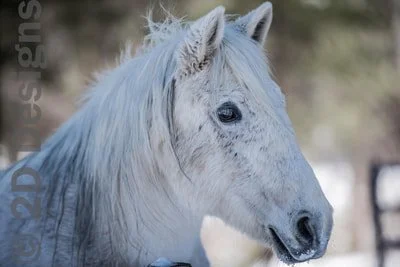
What is inside the Newfoundland pony is as important, if not more important than what is on the outside of the pony, unlike most breeds today. Their temperament is most remarkable and stands out distinctly. Talk to anyone who has lived with one and that is the first thing they will mention - their personality.
Very people-friendly, trusting and willing, they are described as having more dog-like personalities than horses. They have a strong sense of herd, of family, and readily accept people into their "family" as well. They generally think before reacting, are very curious and not easily frightened. Stallions tend to be sweet and docile.
Their defined traits are based on what we call "Survival Traits" - designed and shaped by the beautiful yet rugged landscape and harsh climate of Newfoundland.
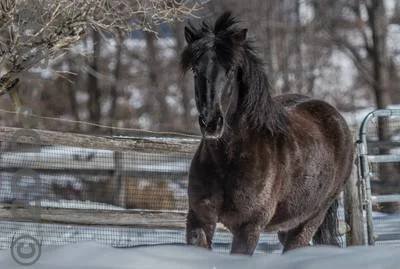
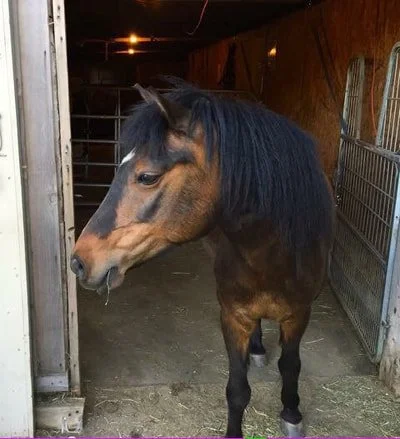
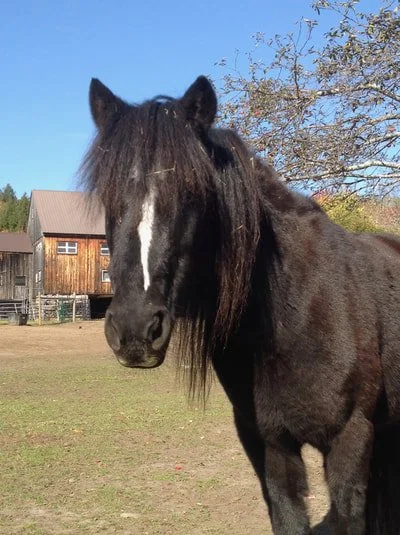
Weighing between 400 and 800 pounds, and standing 11 hands to 14.2 hands, they have thick manes and very thick coats in the winter.
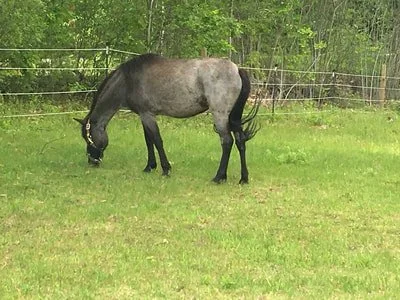
Their characteristic low-set tails allow snow to shed more easily.
Their distinct narrow chests allow for better cooling and warming.
Close set front legs make them agile and sturdy on the rocky ground and able to navigate tight spaces. They also have some feathering.
Their hooves are hard and slow growing.
Short, furry, thick ears are more frostbite resistant and the hooding over their eyes protects them from rain, ice and snow.
They have a moose nose profile, wide jowl, narrow muzzle.
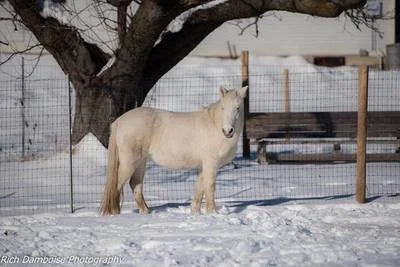
The Newfoundland has primitive colors and markings, and often times has a dorsal stripe. Commonly brownish in color, other colors such as bay, gray, blue roan, red roan, black, chestnut and buckskin are found. No white markings appear on their torso, but some have blazes and white socks.
Some ponies are mild to drastic color changers, changing colors from season to season. Typically a pony will appear black in winter and blue roan in the spring; then black in summer, and blue roan in the fall, cyclical. Others are red roan, and gray changers. This is unique to the breed. All in all this makes your neighbors think you get a new pony every season.
What is key is that a Newfoundland Pony must trace back to having Registered parents born on Newfoundland. Only DNA matching can prove that. Breed Profiling is not accurate and not accepted, nor should it be.
Referred to as the "Poor Man’s Horse” we think of it as "economic". These ponies thrive as backyard ponies. They are multi-purpose, and can do anything from working hard, to taking the kids to school. They are truly all-rounders and we are striving to keep them that way through preservation and teaching correct conservation management.